The core function module provided by AnQi CMS, helping you quickly build an enterprise website
Functional Icon
The login credentials used for switching sites, the difference between one-time tickets and long-term keys lies in the validity period and replayability: tickets should have a short validity period and be used only once, while long-term keys can be used repeatedly within the validity period if forged or leaked. AnQiCMS fixed the issue of login credentials for site switching being forged in v3.6.6. The upgrade recommendation includes rotating the signature key and changing the administrator's password, which is also the direct reason for doing rotation and upgrade together.
Functional Icon
The list sorting parameter may indeed become an injection point, as the column name and direction are usually not bound by placeholders and can be directly concatenated into the query statement. Self-check should start from three aspects: enumerate all entry points that can accept sorting parameters, perform whitelist validation for column names and directions, and converge database account permissions. AnQiCMS fixed the injection issue of list sorting parameters in version v3.6.6 and provided corresponding upgrade suggestions.
Functional Icon
The problem solved by automatic title image is the lack of image and time-consuming in mass production, whether it can be used directly depends on the column risk: Information and experience columns can be reviewed first, and pages related to products, prices and compliance expressions must be confirmed manually. This article explains the sequence of image layout, automatic tags, and title description generation, as well as the inspection criteria before going online
Functional Icon
llms.txt is still an open proposal for standardization, but it has already been adopted by some tool sides and large model manufacturers in their developer documents, and Chrome's Lighthouse will also check this file. The status of the proposal does not mean that no one is using it. What truly determines its value is the maintenance method: manual maintenance may result in two types of failures such as expired entries and actual content drift, therefore the generation entry should be the same as the sitemap, allowing the address list to be updated together with the content changes, and this file on our site is automatically generated by the system.
Functional Icon
After installing the system, check the following six configuration aspects: authentication and session, content security filtering, anti-interference code for data collection, form-side captcha, high-risk operation domains for automated tools, and backup plan. The high-risk operation domains at the site level are default closed, and sensitive word filtering and content review are two independent pipelines, neither of which is recommended to be opened or merged without evaluation. This article explains what to look for, the consequences of making mistakes, and which default values are inherently conservative designs.
Functional Icon
The difficulty of implementing member grouping for a content site lies in the classification of content side, not the permission switch itself: first divide the content into several levels according to the visible range, then define the corresponding relationship between user groups and VIPs, and then discuss orders and distribution. AnQiCMS's user management and VIP grouping can set access permissions for different user groups, and work with custom fields, order management, and financial management to land.
Functional Icon
Scheduled publishing does not directly change the ranking, its role is to fix the update rhythm: determine the frequency according to the content production capacity, pick the time according to the crawling rules, and then cooperate with link push and sitemap to shorten the time for new addresses to be discovered. This article provides scheduling methods, two places that are easy to miss in the document status flow, as well as the verification list on the day of launch.
Functional Icon
The AI capabilities in CMS for generation, editing, metadata, and materials have different levels of automation: AI writing can produce a draft, automatic tagging and TDK can fill in metadata during article creation, and automatic title image matching can solve the problem of image matching but does not take on fact-checking. The process can be reused, but fact verification and content review cannot be omitted. This article gives the boundaries of automation and the points of human oversight by stage.
Functional Icon
Content models determine what fields a type of content has and how it is displayed, and custom fields take out differentiated information such as product parameters and case data. The column structure should be modeled according to the information structure rather than the menu grouping, otherwise, the fields need to be reset and the headers of bulk imports need to be rearranged when expanding the columns. This article provides the sequence for modeling judgment, three common errors, and the approach of using state chains and import functions to follow up on subsequent content.
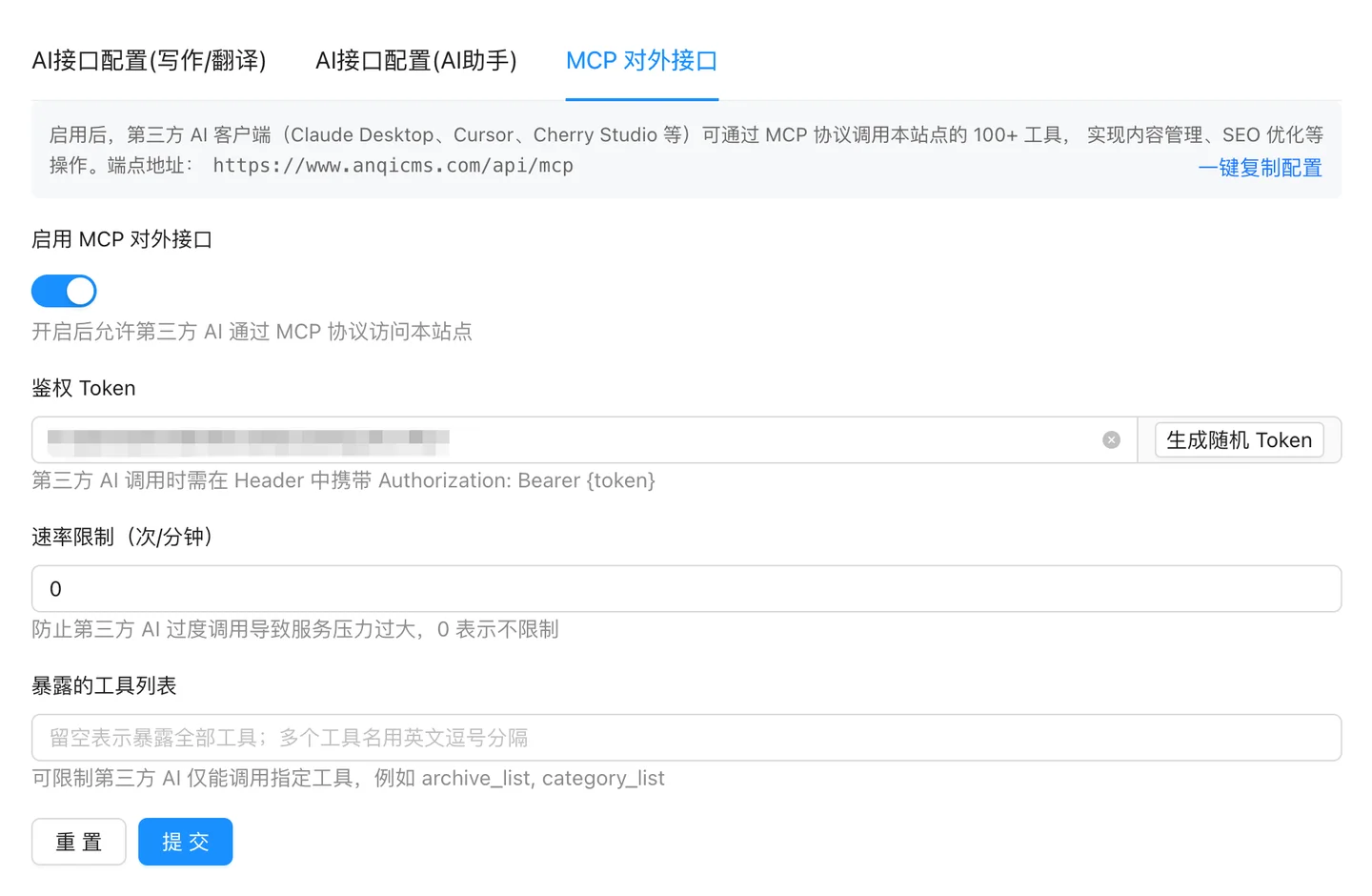
Many systems require additional plugins and independent services to install MCP capabilities, while Anqicms has chosen a more radical approach: integrating the MCP Server directly into the system kernel.After upgrading to a version that supports MCP, there is no need for any additional deployment, the website itself is a standard MCP server. Imagine such a scenario: in the morning, open the AI assistant and say one”}Please help me organize last month's access data into a daily report and list the 10 articles with the lowest click-through rate under the 'SEO' category.After a few seconds, the result is in front of you--and behind this, you haven't opened the website background from start to finish. This is not an illusion; this is exactly what Anqi CMS is.
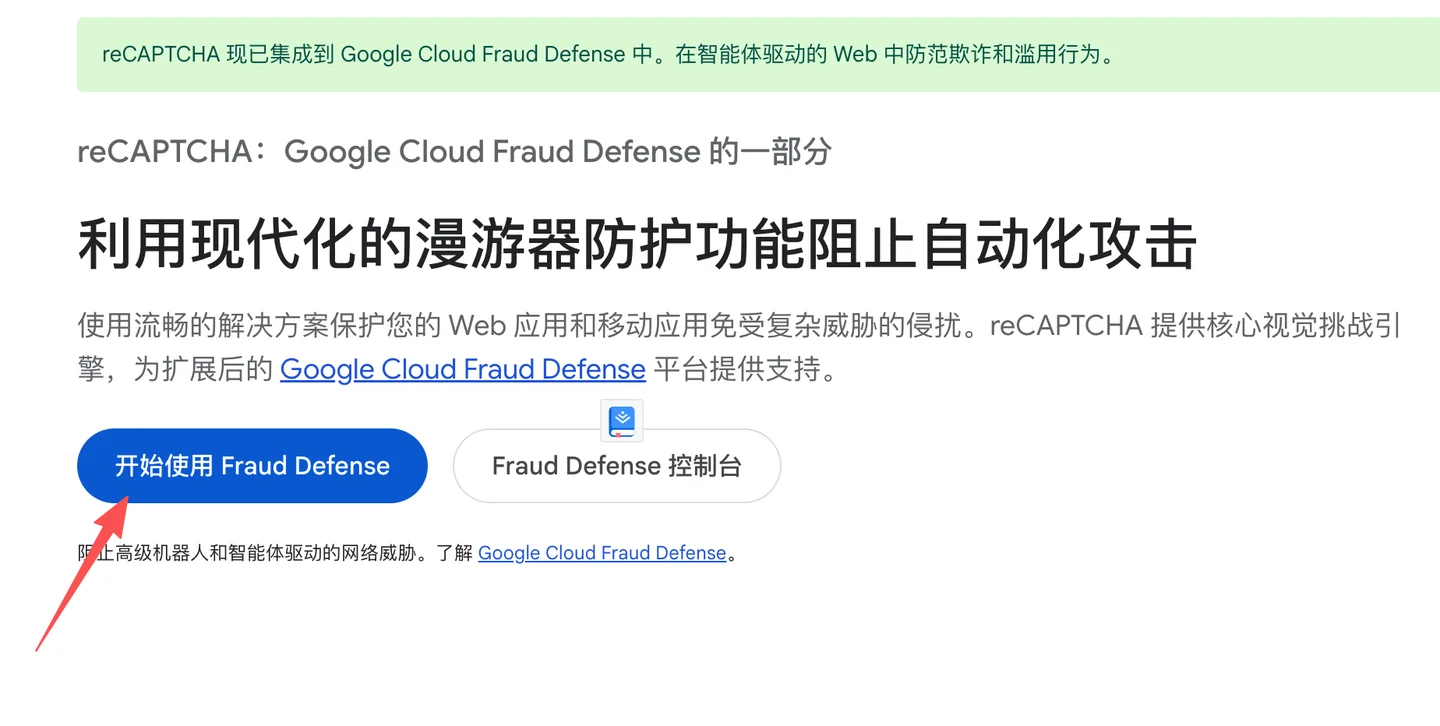
reCAPTCHA is a powerful robot-blocking tool that protects websites from network spam, abuse, and fraudulent activities. It determines whether an action is performed by a human or a robot by analyzing user behavior and other factors.If suspicious activity is detected, reCAPTCHA may take measures to prevent unauthorized access, such as displaying a verification challenge or completely blocking interaction.This helps to ensure that the website remains protected while minimizing interference with legitimate users. The following are three key features: Adaptive Risk Assessment: Analyzing various factors, assessing the risk of the user being a robot, and adjusting the response accordingly Advanced Robot Detection: Using advanced technology to distinguish between humans and robots to ensure accurate identification Continuous Learning
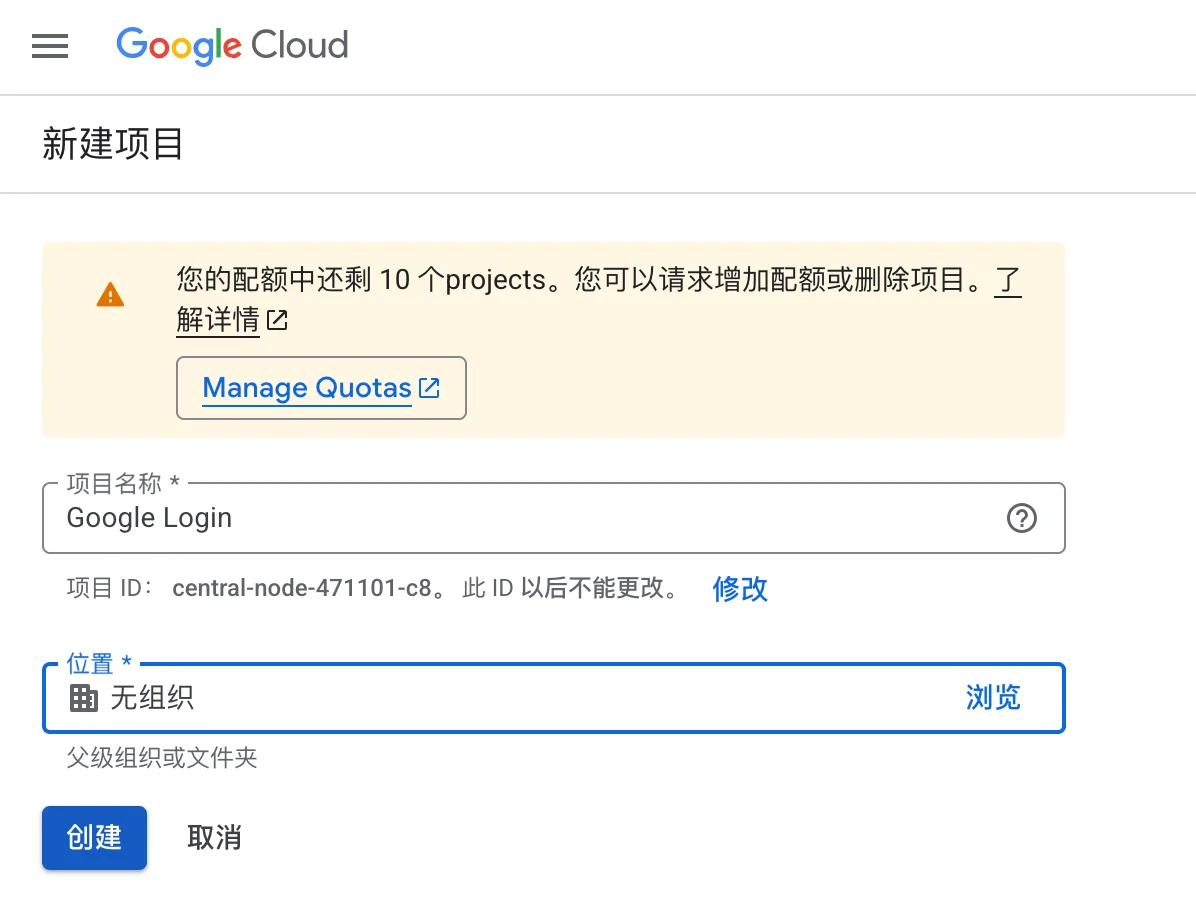
Prerequisites: You must have a Google account, visit https://console.cloud.google.com/ and log in, create a Google API project. If you already have a project, you can skip this step. Quick access address: https://console.cloud.google.com/projectcreate. Enter the project name on the interface that appears, fill in the English name, and then click the create button to complete the creation.
